






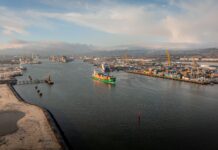
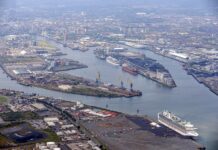

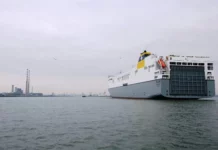
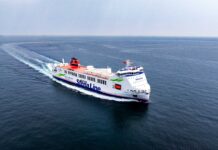

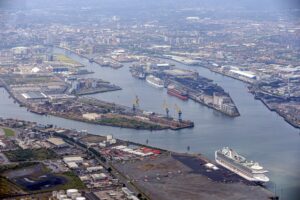
Belfast Harbour has just released its 2025 Annual Report, which highlights another year of strong results and delivery of significant projects by the port.
In 2025, Belfast Harbour’s turnover reached £97.1m, up 10.2 per cent on 2024, while underlying profit before tax was £44.4m, up 21.0 per cent year on year.
Capital expenditure totalled £39.4m, with a further £77.1m committed to future projects at year end.
As a Trust Port, Belfast Harbour is funded solely by the profits it makes and does not receive public funding. It invests all post-tax profits back into improvements to the port and estate. Over the past ten years, Belfast Harbour has invested £426m in major infrastructure and estate development, all funded from its operations.
At the beginning of 2025 Belfast Harbour launched its new five-year strategy Advance Regional Prosperity, which detailed a £313m self-funded programme of investment. The strategy serves as Horizon 1, the first of three stages, of the recently launched 2050 Masterplan, which details £1.3bn of investment in port infrastructure.
Belfast Harbour anchored itself as a driver of the Northern Ireland economy in 2025 by publishing an economic impact report, which found that trade activity through Belfast Harbour supports £8.8bn in total Gross Value Added (GVA) to the regional economy, which equates to 15.7% of NI’s total economic output.
Last year saw Belfast Harbour break ground on D3, its new £90m deepwater quay, the largest single capital project in the port’s history. The port also secured a £100m agreement with JERA Nex bp to advance the UK and Ireland’s offshore wind transition.
City Quays Gardens opened in May 2025, providing those who live and work in the area with a new green space at the heart of the waterfront, as well as advancing plans for residential development on the estate with planning submitted for 600+ homes at Clarendon Wharf.
In its annual report, Belfast Harbour said it is on track to achieve net zero operational emissions ahead of its 2030 target, having reduced operational carbon by 70 per cent since 2015, and is on course to be the first net zero port operator on the island of Ireland.
Throughout 2025, Belfast Harbour continued to engage with local communities and organisations with £335,000 invested directly into communities during the year, enhanced by £250,000 of in-kind support.
Trade through Belfast Harbour remained resilient in 2025, despite ongoing global uncertainty, with 24.3 million tonnes of cargo passing through the port, broadly in line with 2024’s figures.
Cruise activity also remained strong throughout, with 147 ship calls and over 320,000 passengers and crew visiting Belfast and the wider region, which is estimated to be worth £25m to the local economy. The industry also celebrated the 1,500th cruise call to Belfast during the year.
READ THE FULL STORY IN THE NEXT ISSUE OF EXPORT & FREIGHT MAGAZINE
